Policy that drives change
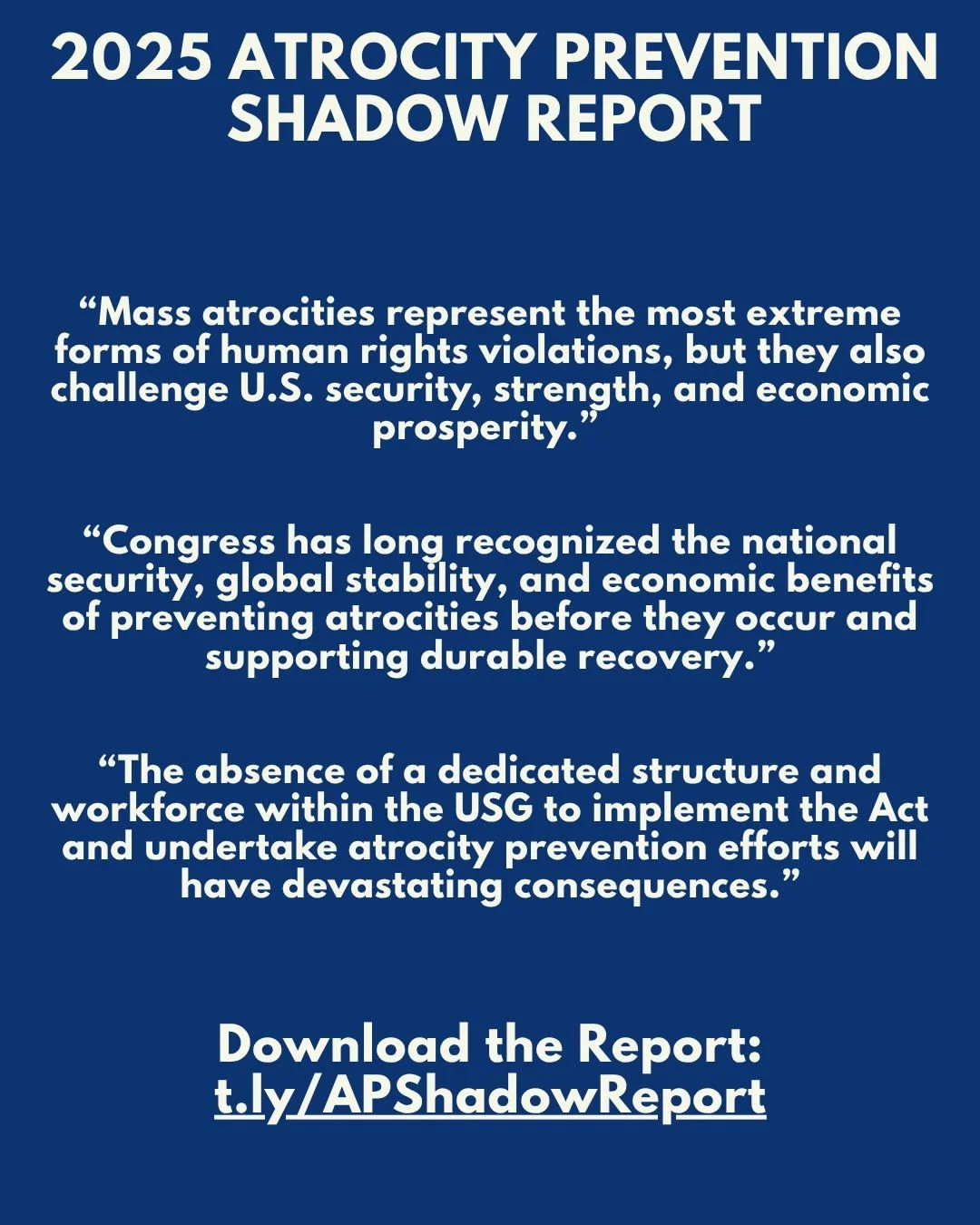
2025 Elie Wiesel Act Shadow Report
In 2025, the reorganization of the U.S. State Department and the elimination of key atrocity prevention staff and offices, the dissolution of U.S. Agency for International Development and its atrocity prevention staff and programming, the undermining of AP Intelligence Community capabilities, and large-scale layoffs of federal employees with country-specific and regional expertise resulted in the hollowing out of AP capacity in the U.S. Government. The Executive Branch is now delinquent by more than half a year in its Congressionally mandated obligation to provide a report on USG AP efforts. I led a team of former USG AP experts who contributed their knowledge, while in the midst of being fired or forced into retirement, to produce the first ever Shadow Report to Congress on any topic.
Impact:
Initial public and ongoing private Congressional member & staff briefings;
Training and engagement for experts in academia and civil society;
“Trump is undermining his own law that prevents mass atrocities,” (op-ed) The Hill, August 3, 2025;
“What Is a Shadow Report, and Why Does It Matter So Much for American Women?,” More to Her Story, December 15, 2025; and
Social media engagement across multiple platforms in the tens of thousands.
PPWG Assessments and Recommendations
As a member and leader in the Prevention and Protection Working Group, I authored dozens of resources related to U.S. Government implementation of the 2018 Elie Wiesel Genocide and Atrocities Prevention Act and led numerous interactions between civil society actors, U.S. Government experts, and foreign and international practitioners.
Impact:
Multiple Elie Wiesel Act Report Assessments;
Formal AP recommendations for incoming Presidential administrations;
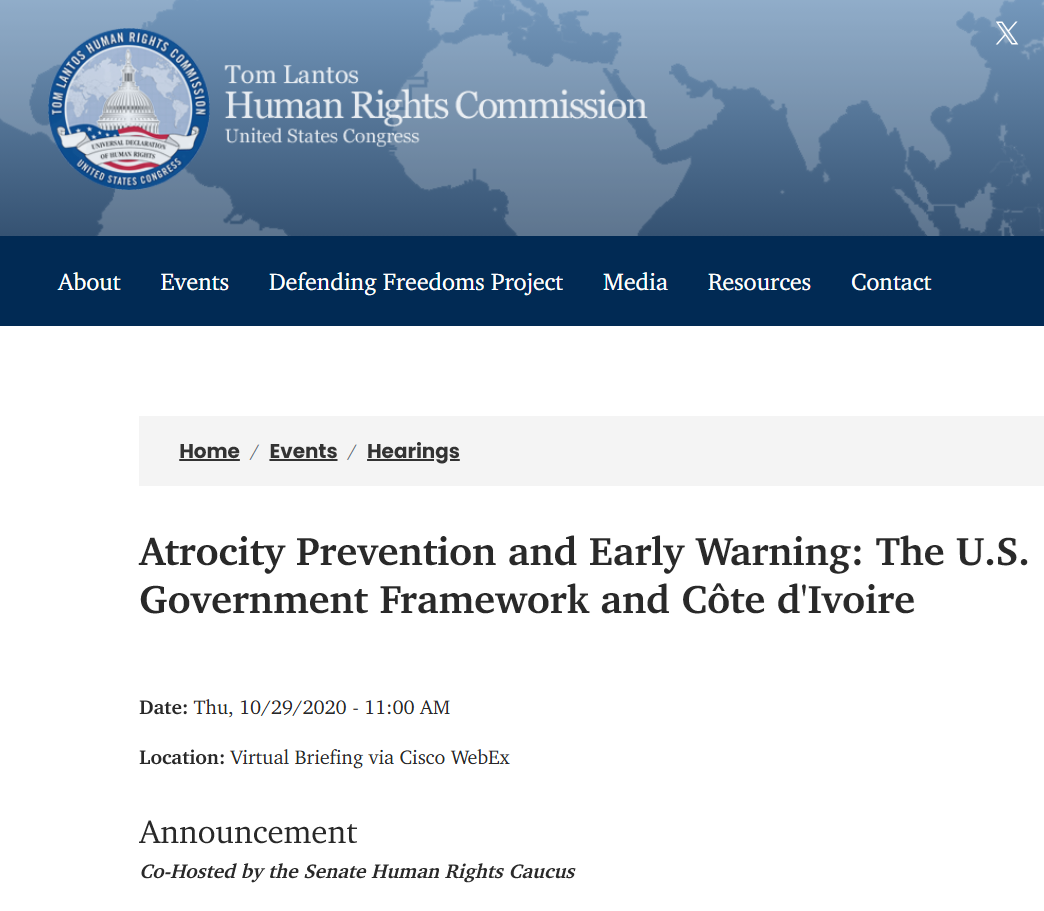
“Atrocity Prevention and Early Warning,” Tom Lantos Human Rights Commission briefing, U.S. Congress, October 29, 2020;
Dozens of National Security Council, Department of State, Department of Defense, and US Agency for International Development briefings;
Multiple media consultations for news stories related to mass atrocities.
International Legal Training and Policy Application
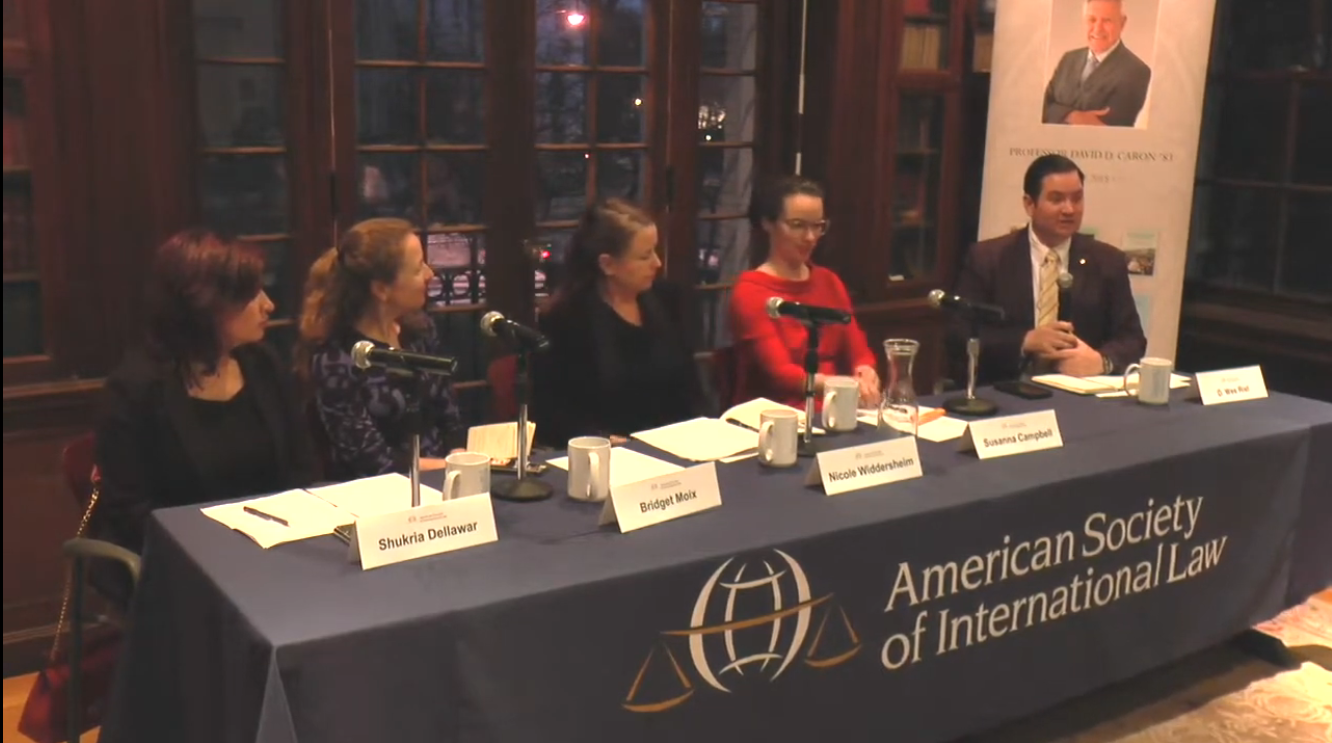
As the Deputy Executive Director and Director of Research and Education of the American Society of International Law (ASIL) and the Assistant Director and Professor at the Center for International Legal Education at the University of Pittsburgh School of Law, I organized trainings, conferences, and symposia for thousands of lawyers from over 150 different countries. These trainings focused on improving practical skills, identifying the policy implications of international law development, and the methodology for implementing international law standards at local, state, federal, and international levels.
Impact:
Management of ASIL’s “Task Force on Policy Options for U.S. Engagement with the International Criminal Court;”
Design and implementation of ASIL Atrocity Prevention & International Law Signature Topic series;
“The Future of a US Sanctioned International Criminal Court,” World Federalist Movement, June 29, 2020;
“Mind the Gap(s): Global Fragility and Atrocity Prevention,” American Society of International Law, February 25, 2020;
Dozens of targeted trainings on international human rights, civilian protection, and atrocity prevention for government and civil society lawyers, NGO actors, and international organization experts.